

How do nucleosides affect cell division?
Aug 08, 2025
Leave a message
Hey there! As a nucleosides supplier, I've seen a lot of interest in how these little molecules can impact cell division. So, I thought I'd dive into the topic and share what I've learned.
First off, let's quickly cover what nucleosides are. They're basically the building blocks of nucleic acids, like DNA and RNA. You can think of them as the Legos that cells use to construct the genetic material that controls everything from how we look to how our bodies function. Each nucleoside is made up of a nitrogenous base (like adenine, guanine, cytosine, or thymine) attached to a sugar molecule.
Now, onto the main event: how nucleosides affect cell division. Cell division is a super important process in our bodies. It's how we grow, repair damaged tissues, and replace old cells. There are two main types of cell division: mitosis and meiosis. Mitosis is what happens when our body cells divide to make more of the same type of cells, while meiosis is used to create sex cells (like sperm and eggs).
Nucleosides play a crucial role in both types of cell division. One of the key ways they do this is by providing the raw materials for DNA synthesis. During cell division, the DNA in the cell needs to be replicated so that each new cell gets a complete set of genetic instructions. Nucleosides are incorporated into the growing DNA strands, allowing the replication process to happen.
For example, when a cell is getting ready to divide, it takes in nucleosides from the surrounding environment. These nucleosides are then used by enzymes called DNA polymerases to build new DNA molecules. Without an adequate supply of nucleosides, DNA replication can slow down or even stop, which can have a big impact on cell division.
But that's not all. Nucleosides can also affect cell division in other ways. Some nucleosides can act as signaling molecules, sending messages to the cell about when it's time to divide or stop dividing. They can also interact with proteins involved in the cell cycle, which is the series of events that a cell goes through from one division to the next.
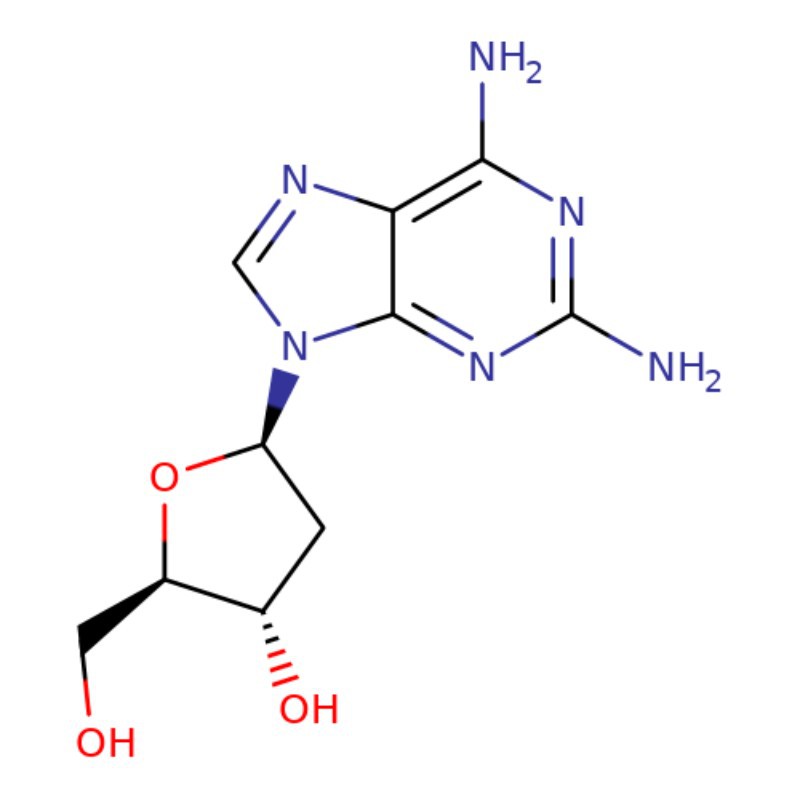
Let's take a closer look at some specific nucleosides and how they can impact cell division. One interesting nucleoside is 2,6-diaminopurine 2'-deoxyriboside. This nucleoside has been shown to have anti-cancer properties. It can interfere with DNA synthesis in cancer cells, preventing them from dividing and growing. By targeting the cancer cells' ability to replicate their DNA, 2,6-diaminopurine 2'-deoxyriboside can help slow down the progression of cancer.
Another nucleoside, 3'-O-Methyladenosine, has been found to play a role in regulating the cell cycle. It can affect the activity of certain proteins that control whether a cell enters the next phase of the cell cycle. By modulating these proteins, 3'-O-Methyladenosine can influence how often and how quickly cells divide.
Cytarabine 5'-Monophosphate is yet another nucleoside with important effects on cell division. It's a chemotherapy drug that works by being incorporated into the DNA of cancer cells. Once inside the DNA, it disrupts the normal replication process, causing the cancer cells to die. This is a powerful way to target and destroy cancer cells while minimizing damage to healthy cells.
In addition to their roles in normal cell division and cancer treatment, nucleosides can also have implications for other areas of health. For example, some studies have suggested that nucleoside supplementation may be beneficial for people with certain diseases or conditions. In people with immune system disorders, nucleosides may help support the production of new immune cells, which can improve the body's ability to fight off infections.
So, as you can see, nucleosides are pretty amazing molecules. They have a wide range of effects on cell division, and their potential applications in medicine and health are really exciting. Whether you're a researcher looking to study the fundamental processes of cell division or a healthcare provider interested in using nucleosides for treatment, having access to high-quality nucleosides is essential.

That's where we come in. As a nucleosides supplier, we're committed to providing our customers with the purest and most reliable nucleosides on the market. We work with top-notch manufacturers to ensure that our products meet the highest standards of quality and purity. Whether you need a small quantity of a specific nucleoside for a research project or a large order for a pharmaceutical production, we've got you covered.
If you're interested in learning more about our nucleosides or have any questions about how they can be used in your work, don't hesitate to reach out. We're here to help you find the right nucleosides for your needs and support you every step of the way. Contact us today to start a conversation about your nucleoside requirements, and let's see how we can work together to make a difference in the world of cell division research and treatment.
References
- Alberts, B., Johnson, A., Lewis, J., Raff, M., Roberts, K., & Walter, P. (2002). Molecular Biology of the Cell. Garland Science.
- Lodish, H., Berk, A., Zipursky, S. L., Matsudaira, P., Baltimore, D., & Darnell, J. (2000). Molecular Cell Biology. W. H. Freeman.
- Venter, J. C., et al. (2001). The sequence of the human genome. Science, 291(5507), 1304-1351.