

How does Glutathione interact with free radicals in the body?
Dec 01, 2025
Leave a message
Hey there! As a glutathione supplier, I've been getting a lot of questions lately about how glutathione interacts with free radicals in the body. So, I thought I'd take a deep dive into this topic and share some insights with you all.
First off, let's talk about what free radicals are. Free radicals are unstable molecules that are produced naturally in the body as a by - product of normal metabolic processes, like when we convert food into energy. But they're also generated by external factors such as pollution, smoking, alcohol, and exposure to UV rays. These free radicals have an unpaired electron, which makes them highly reactive. They go around in the body, trying to steal electrons from other molecules, like DNA, proteins, and lipids. This process is called oxidation, and it can cause a whole lot of damage. Oxidative stress, caused by an imbalance between free radicals and antioxidants in the body, has been linked to various health issues, including aging, cancer, heart disease, and neurodegenerative disorders.
Now, here's where glutathione comes in. Glutathione is a powerful antioxidant that's made up of three amino acids: cysteine, glycine, and glutamic acid. It's found in every cell of the body, and it plays a crucial role in maintaining the body's redox balance.
One of the main ways glutathione interacts with free radicals is through a process called direct scavenging. Glutathione has a sulfur - containing cysteine residue, which is very reactive. When a free radical comes along, glutathione can donate an electron to the free radical, neutralizing it. This turns the free radical into a stable molecule, and in the process, glutathione itself gets oxidized. The oxidized form of glutathione, called glutathione disulfide (GSSG), can then be converted back to its reduced form (GSH) by an enzyme called glutathione reductase, using the coenzyme NADPH. This recycling mechanism allows glutathione to keep on fighting free radicals over and over again.
Another important interaction between glutathione and free radicals is through its role in the glutathione peroxidase enzyme system. Glutathione peroxidase is an enzyme that uses glutathione as a co - substrate to break down hydrogen peroxide and lipid hydroperoxides, which are types of reactive oxygen species (ROS) or free radicals. When hydrogen peroxide or lipid hydroperoxides are present in the cell, glutathione peroxidase catalyzes the reaction where glutathione donates electrons to these ROS, converting them into water and non - toxic lipids, respectively. This is a crucial defense mechanism against oxidative damage, especially in cells that are exposed to high levels of ROS, like liver cells and immune cells.
Glutathione also works in synergy with other antioxidants in the body. For example, it can regenerate other antioxidants like Vitamin A. Vitamin A is an antioxidant that can also neutralize free radicals. When Vitamin A gets oxidized by a free radical, glutathione can donate electrons to it, converting it back to its active form. This way, glutathione helps to maintain the antioxidant capacity of the body as a whole.
In addition to its antioxidant properties, glutathione is also involved in the detoxification process. Many toxins and drugs are metabolized in the liver, and glutathione plays a key role in this process. It can bind to these toxins and make them more water - soluble, so they can be easily excreted from the body. Some of these toxins can generate free radicals as they're being metabolized, and by helping to remove them, glutathione indirectly reduces the production of free radicals in the body.
Now, you might be wondering how you can ensure that your body has enough glutathione to fight off free radicals. Well, our bodies can produce glutathione naturally, but as we age, our ability to produce it decreases. Also, factors like stress, poor diet, and certain medical conditions can deplete glutathione levels. That's where our high - quality glutathione products come in. We offer a range of glutathione supplements that are formulated to provide your body with the necessary amount of this powerful antioxidant.
Our glutathione products are carefully sourced and manufactured to ensure purity and potency. Whether you're looking to boost your overall health, slow down the aging process, or support your body's natural detoxification system, our products can be a great addition to your daily routine.
Let's also talk about some of the other substances that can work together with glutathione to enhance its effects. Titanium Dioxide is often used in skincare products. It acts as a physical sunscreen, reflecting and scattering UV rays. By protecting the skin from UV - induced free radical damage, it complements the antioxidant action of glutathione. When used in combination, they can provide better protection against skin aging and damage.

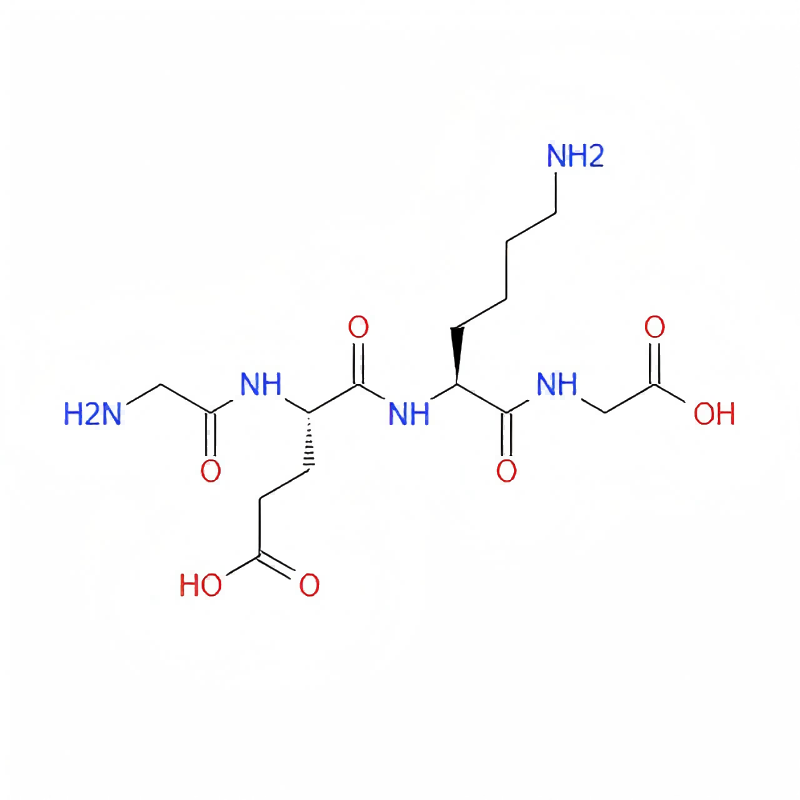
Tetrapeptide - 21 is another interesting compound. It has been shown to have anti - aging properties by promoting collagen synthesis and reducing inflammation. Since oxidative stress can also lead to inflammation and collagen breakdown, using tetrapeptide - 21 along with glutathione can have a synergistic effect on maintaining skin health and overall well - being.
If you're interested in learning more about our glutathione products or have any questions about how glutathione interacts with free radicals in the body, don't hesitate to reach out. We're here to help you make the best choices for your health. Whether you're a retailer looking to stock our products or an individual interested in improving your antioxidant status, we'd love to have a chat with you. Just drop us a line, and we'll get back to you as soon as possible.
In conclusion, glutathione is a superhero when it comes to fighting free radicals in the body. Its ability to directly scavenge free radicals, work in enzyme systems, and recycle other antioxidants makes it an essential part of our body's defense against oxidative stress. And with our high - quality glutathione products, you can give your body the support it needs to stay healthy and vibrant.
References
- Halliwell, B., & Gutteridge, J. M. C. (2015). Free Radicals in Biology and Medicine. Oxford University Press.
- Meister, A., & Anderson, M. E. (1983). Glutathione. Annual Review of Biochemistry, 52, 711 - 760.
- Sies, H. (1999). Strategies of antioxidant defense. European Journal of Biochemistry, 266(2), 491 - 509.